

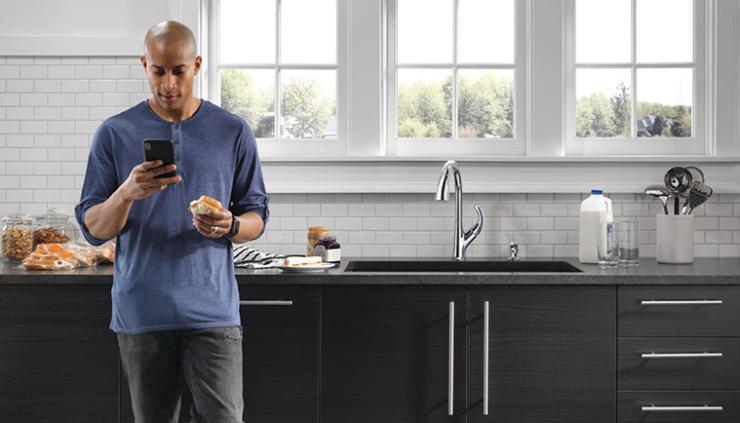
Everything you need to know before replacing your kitchen faucet—from measurements to making the purchase.
Before You Go
- Who uses the kitchen faucet in the home? If kids or elderly family members regularly use the kitchen, you’ll want a faucet that’s easy to turn on and off. Try a single-handle faucet, which is easy to maneuver.
- Are you a serious cook? Are you a wannabe chef with an arsenal of huge pots, or do you “cook” via a takeout menu? If it’s the former, look for a faucet with a high arc for washing big pots and pans.
- Look at the general depth of the sink. Faucets that are too big can splash water out of a shallow sink.
- Check out the space around the sink. Is there a window or view of the family room you won’t want to obstruct with a tall faucet?
- How many faucets are there? Is there, say, a filtered drinking water unit near the sink that you’ll need to accommodate?
- Getting new countertops, too? Hold off on ordering them. Counters are custom-drilled to match your faucet holes, so you’ll want to select the faucet first.
What to Measure
- The thickness of the deck (that’s plumbing-speak for the sink or countertop—whatever the faucet will attach to).
- The number of holes in the deck.
- The spacing (in inches) between each hole, measured from the approximate center.
Things to Bring
- Measurements.
- A measuring tape.
- Any materials you plan to match the faucet’s finish with (such as cabinet hardware), and photos of the sink area.
Before You Buy
- Match the faucet’s finish to stainless steel or look for a finish that matches the cabinet hardware. Most kitchen faucets are available in stainless steel, bronze and chrome, though those finishes aren’t identical from brand to brand.
- Find out whether a lifetime warranty covers the faucet. Most well-known brands offer them.
- Check the longevity of the brand. You want to be sure the company will still be in business down the line to honor that warranty.