

Water Pressure FAQs
We've been building faucets for nearly half a century. And in that time, we've solved plenty of riddles for homeowners and pros alike. We've gathered some of our most-asked questions to life a little easier for you.
Water Pressure
Are "tankless" water heaters recommended?
The outgoing water pressure from a "tankless" water heater is relatively low. Consequently, these devices are not generally recommended for use with pressure-balanced units (due to the possible differences in water pressure from the hot and cold lines). For example, if you were to have 20 PSI on the hot supply line and 50 PSI on the cold, your resulting operating pressure in the shower will be reduced (since pressure balancing adjusts to the low pressure).
Can I change my standard tub, shower or tub/shower faucet to a pressure balance faucet?
Pressure balance faucets use different valve technology than non-pressure balance units. To obtain the benefits of pressure balance, you will need to purchase a new Peerless® pressure balance faucet.
Can I remove water restrictors in shower heads or aerators?
Flow restrictors are usually found in the neck or threaded end of the shower head exposed when the shower head is removed from the shower arm as shown in the image below. They would appear in the opening of the aerator when it is removed from a lavatory or kitchen faucet.
While it is possible to remove flow restrictors from shower heads, we strongly advise against it for several reasons. Flow restrictors for faucets are an integral part of most aerators, and it is generally not possible or desirable to remove them.
For water conservation purposes, most plumbing codes require faucets and showering devices to not exceed a certain maximum flow rate. Removing the flow restrictors could cause these devices to no longer meet these codes.
If you are noticing decreased water pressure or a poor-quality flow rate, you may have debris in your flow restrictor or the screen filter in your shower head or aerator. Often this is easily remedied with a simple cleaning process.
To clean the shower head, first remove it from the shower arm by turning it counterclockwise. Aerators are removed in the same way, turning counterclockwise.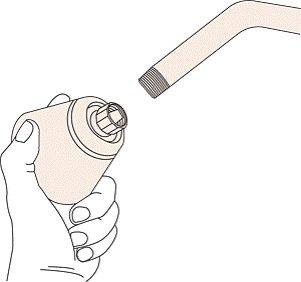
Examine the threaded portion of the shower head or aerator and flush or rub away any debris you find clogging the flow restrictor or filter screen. You may want to soak it in vinegar overnight to remove any lime deposits. Once you do this, flush it well with water, rubbing it with a toothbrush if the deposits are stubborn.
Re-install the shower head or aerator by turning clockwise.
I just moved into a newly constructed home. Why would my water pressure be low?
During the first few days you use your faucets, a small amount of debris may be flushed out of your pipe system. This happens even though the plumber flushes the pipes before completing work on your home. In addition, particles of solder, copper chips, plumber's tape, and other installation materials can get caught in aerators and showerheads. Occasionally, a chip might damage the valve seat that provides the watertight seal. The tips below will help you avoid problems. These procedures are a good idea to follow each time the water has been turned off for repairs in your home.
TO FLUSH A KITCHEN OR LAVATORY FAUCET:
- Remove the aerator, and sealing gasket if present.
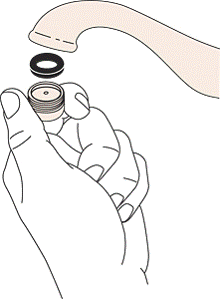
- Turn faucet handle(s) to full on hot and cold mixed position(s) and flush lines for two minutes before turning off water with handle(s).
- Replace aerator.
TO FLUSH A TUB / SHOWER FAUCET:
- Remove shower head if applicable.
- Turn handle(s) to full on hot and cold mixed position(s).
- Flush spout two minutes without moving handle(s).
- If you have a showerhead, divert water to it and flush for two minutes. BE SAFE! Make sure cold water flows FIRST and that the rotational handle limit stop is properly set.
- Replace shower head.
Some debris and/or foreign material in the lines may be too large to pass through the faucet whether it is a kitchen, lavatory or tub/shower faucet. To remove this type of debris:
- Turn off water supply to both hot and cold.
- Remove all internal components.
- Turn water supplies back on and let run for 30-60 seconds. (For kitchen and lavatory faucets turn a bucket or similar large container upside down over faucet to deflect the water into the sink.).
- Turn water supplies off again.
- Reassemble faucet.
- Turn water supplies back on.
If it has been several years since you last had a new faucet, keep in mind flow rates have been reduced to meet regulatory standards 30-45%.
Why does my faucet have low water pressure?
The debris screens and flow restrictors required for aerators and shower heads can clog, resulting in greatly reduced flow rates. Remove the aerator of the sink faucet or shower head and make sure the flow restrictor is not clogged. Additionally, flushing the system properly will help to reduce the possibility and frequency of occurrences. The tips below will help you avoid problems. These procedures are a good idea to follow each time the water has been turned off for repairs in your home and periodically as maintenance.
TO FLUSH A KITCHEN OR LAVATORY FAUCET:
- Remove the aerator, and sealing gasket if present
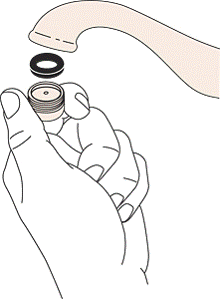
- Turn faucet handle(s) to full on hot and cold mixed position(s) and flush lines for two minutes before turning off water with handle(s).
- Replace aerator.
TO FLUSH A TUB / SHOWER FAUCET:
- Remove shower head if applicable.
- Turn handle(s) to full on hot and cold mixed position(s).
- Flush spout two minutes without moving handle(s).
- If you have a showerhead, divert water to it and flush for two minutes. BE SAFE! Make sure cold water flows FIRST and that the rotational handle limit stop is properly set.
- Replace shower head.
Some debris and/or foreign material in the lines may be too large to pass through the faucet whether it is a kitchen, lavatory or tub/shower faucet. To remove this type of debris:
- Turn off water supply to both hot and cold.
- Remove all internal components.
- Turn water supplies back on and let run for 30-60 seconds. (For kitchen and lavatory faucets turn a bucket or similar large container upside down over faucet to deflect the water into the sink.).
- Turn water supplies off again.
- Reassemble faucet.
- Turn water supplies back on.
If it has been several years since you last had a new faucet, keep in mind flow rates have been reduced to meet regulatory standards 30-45%.
Why does my new faucet have reduced flow? My old faucet had plenty of volume.
Please keep in mind that all new faucets since 1994 are restricted to conserve water per EPA code mandates. Older faucets had no restrictions. Beyond intentional flow restriction, new installations can sometimes have reduced flow if the lines are not flushed prior to installation of aerators or shower heads. The flow restrictors required for aerators and shower heads can clog, resulting in greatly reduced flow rates. Remove the aerator or shower head and make sure the flow restrictor is not clogged.
TO FLUSH A KITCHEN OR LAVATORY FAUCET:
- Remove the aerator, and sealing gasket if present
- Turn faucet handle(s) to full on hot and cold mixed position(s) and flush lines for two minutes before turning off water with handle(s).
- Replace aerator.
TO FLUSH A TUB / SHOWER FAUCET:
- Remove shower head if applicable.
- Turn handle(s) to full on hot and cold mixed position(s).
- Flush spout two minutes without moving handle(s).
- If you have a showerhead, divert water to it and flush for two minutes. BE SAFE! Make sure cold water flows FIRST and that the rotational handle limit stop is properly set.
- Replace shower head.
Some debris and/or foreign material in the lines may be too large to pass through the faucet whether it is a kitchen, lavatory or tub/shower faucet. To remove this type of debris:
- Turn off water supply to both hot and cold.
- Remove all internal components.
- Turn water supplies back on and let run for 30-60 seconds. (For kitchen and lavatory faucets turn a bucket or similar large container upside down over faucet to deflect the water into the sink.).
- Turn water supplies off again.
- Reassemble faucet.
- Turn water supplies back on.
If it has been several years since you last had a new faucet, keep in mind flow rates have been reduced to meet regulatory standards 30-45%.